Tampa Bay's Boutique Fitness Boom Isn't Slowing Down
By Sam Bertini, M.S., B.S. | September 17, 2026
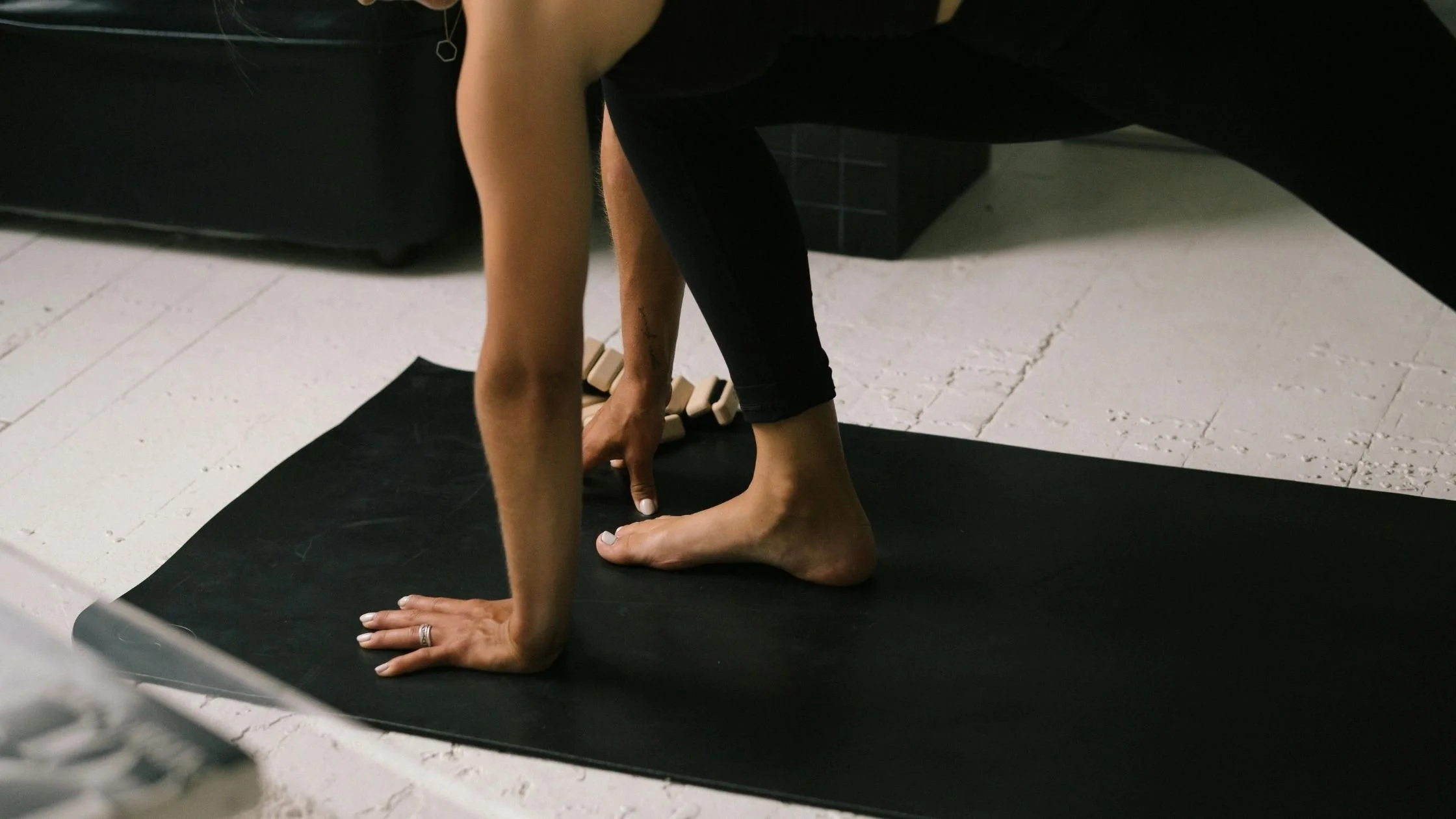
Drive around South Tampa, downtown St. Pete or some of Tampa Bay's fastest-growing neighborhoods and the fitness options look considerably different than they did a decade ago.
The traditional gym hasn't disappeared. Neither have running clubs, yoga studios, CrossFit boxes or personal trainers.
What's changed is how specific the market has become.
Pilates studios can specialize in reformer classes, heated workouts or particular apparatus. Strength concepts are building entire brands around a proprietary method. Other businesses combine movement with recovery, hospitality, events or social experiences.
Tampa Bay residents aren't simply choosing where to work out anymore.
They're increasingly choosing how they want fitness to fit into their lives, and businesses are responding.
The Tampa Bay Times recently described a surge of class-based studios opening across the region, including continued expansion from Pilates and strength-focused brands. The publication connected that growth to increased consumer interest in health and wellness as well as the role studios can play as social spaces outside work and home.
September is about to provide another good example.
Calore Club is scheduled to open September 15 at 212 N. Rome Avenue in Tampa with an infrared-heated fitness concept built around strength, sculpt and choreographed movement. Meanwhile, Rare Body Studio is expanding its St. Petersburg presence with another specialized Pilates studio planned at 290 Dr. MLK Jr. Street North.
They aren't isolated openings.
They're part of a much larger shift happening across Tampa Bay.
Boutique Fitness Is Becoming Its Own Economy
The term "boutique fitness" can make these businesses sound like smaller versions of gyms.
That's increasingly inaccurate.
A successful boutique studio may offer fewer workout types than a traditional health club because specialization is the entire point. Instead of providing dozens of ways to exercise under one roof, the business builds expertise, branding and community around a particular experience.
That specialization can support a very different business model.
Customers aren't necessarily paying for access to equipment. They're paying for instruction, programming, accountability and an environment that makes them want to return.
The experience surrounding the workout has become part of what they're buying too.
Calore Club is a good example. Its MAT360 method combines high-repetition strength work, sculpting and choreographed movement in an infrared-heated room. The studio also promotes curated playlists, dynamic lighting, upscale locker rooms, recovery drinks and other amenities as part of the overall experience.
That's considerably different from selling access to a treadmill.
Tampa Bay Has Become a Good Market for Specialized Concepts
Boutique fitness requires a particular kind of customer.
The business needs enough people nearby who are interested in the method, can afford recurring classes or memberships, and value the experience enough to make it part of their routine.
Parts of Tampa Bay increasingly provide that audience.
The region's population growth has expanded the customer base while neighborhoods such as South Tampa, Water Street, downtown St. Pete and surrounding urban districts offer concentrations of residents, professionals, restaurants, retail and other lifestyle-oriented businesses.
Fitness operators have noticed.
The Tampa Bay Times reported that national Pilates brand Jetset opened three Tampa locations in 2025 and had another dozen locations planned between Sarasota and Gainesville by the end of 2027. Solidcore, meanwhile, is adding a Water Street Tampa studio to its existing Tampa Bay presence.
Solidcore is expected to open its Water Street location in fall 2026, expanding from existing locations in Hyde Park and St. Petersburg.
Businesses don't make those expansion decisions solely because a neighborhood looks good on Instagram.
They need enough demand to support another location.
Pilates Has Become Particularly Difficult to Ignore
Of all the categories benefiting from Tampa Bay's boutique fitness growth, Pilates may be one of the most visible.
Reformer studios have expanded throughout the region, while businesses are increasingly developing variations that combine Pilates principles with strength training, heated environments or other movement styles.
That evolution matters.
A growing category tends to create more specialization as businesses look for ways to serve customers whose preferences are becoming more sophisticated.
Someone who once searched broadly for a workout class may now be looking specifically for reformer Pilates, Cadillac training, heated sculpt or low-impact strength.
Rare Body Studio's expansion illustrates that progression.
The company currently operates locations in St. Petersburg and Tampa, and its website lists another St. Pete studio coming in 2026 at 290 Dr. MLK St. N. The new location is focused on Cadillac, Chair and specialized private training.
Instead of simply duplicating an existing studio, the expansion creates room for a more specialized part of the practice.
That's an interesting sign of a maturing market.
Rare Body's New St. Pete Location Is Combining Fitness With Hospitality
The Rare Body expansion also offers a glimpse at where boutique wellness businesses may be heading next.
Its new St. Petersburg space won't exist entirely on its own.
LX Coffee is opening its first permanent location inside the same development. The roughly 2,200-square-foot coffee shop will operate alongside the fitness concept, with the businesses designed to complement one another throughout the day.
That pairing is worth paying attention to.
A person can take a class and stay for coffee. Someone working remotely can use the café without attending the studio. The space can attract different customers while still building around overlapping interests in wellness, lifestyle and community.
The concept begins to function differently from a traditional gym.
It becomes somewhere people can spend time.
That distinction may help explain why the term "third place" keeps entering conversations about boutique fitness. The studio can occupy a space in someone's routine that sits somewhere between exercise facility and social environment.
Fitness Is Competing With Entertainment for Consumer Spending
A $200-plus monthly fitness membership isn't an insignificant expense.
Calore Club currently lists memberships above $200 per month, depending on the plan, while Rare Body offers memberships and packages across its different class formats.
Yet consumers continue paying for boutique fitness.
That tells us something important about what they're comparing it against.
The decision isn't always between a $30 gym membership and a $200 studio membership.
For some customers, boutique fitness sits in the same discretionary spending category as dining, beauty treatments, events, travel, hobbies and other experiences that contribute to how they spend their free time.
A workout that also provides social connection and an enjoyable environment can compete for dollars differently from a facility selling equipment access.
That changes what fitness businesses need to deliver.
Results still matter. Instruction matters enormously.
But the room itself, the people, the music, the booking experience and the feeling of belonging can influence whether someone believes the membership deserves a recurring place in their budget.
The Rise of Wellness Culture Goes Beyond Exercise
Fitness isn't growing in a vacuum.
Consumers have access to an enormous amount of information about sleep, recovery, nutrition, strength, mobility and other aspects of health that previously lived largely inside medical or athletic environments.
Wearable devices have made personal health data more visible. Social media has introduced people to new forms of training, while wellness services have become more mainstream.
The Tampa Bay Times points to this broader shift in health awareness as one of the forces supporting local studio growth.
That doesn't mean every wellness trend is scientifically sound or appropriate for every person.
It does mean consumers are paying attention.
Someone interested in improving strength may also care about mobility. A Pilates customer may spend money on massage, skincare, nutrition, recovery or other wellness services.
That creates an ecosystem rather than a single industry.
Tampa Bay has increasingly become fertile ground for businesses operating within it.
The "Third Place" Idea Is Especially Important
There's another factor behind the boutique fitness boom that has very little to do with calories burned.
People want places to go.
Remote and hybrid work changed how many people interact with their communities. Social lives have shifted as well, particularly for adults who aren't naturally meeting new people through school or a traditional office environment.
A recurring fitness class creates structure.
The same people may attend at similar times each week. Members recognize instructors and eventually recognize one another. Events, challenges and other programming can deepen those connections.
The Tampa Bay Times reported that studio operators see this community element as an important part of the category's appeal.
That gives boutique studios something difficult for an app to reproduce.
A person can find an excellent workout on their phone.
It's harder for a phone to make them feel like they have somewhere to be Tuesday at 6 p.m.
Social Media Has Changed How People Discover Workouts
Boutique fitness is also particularly compatible with the way consumers discover businesses today.
A workout method can spread far beyond the physical radius of a studio through video.
People see an unfamiliar machine, exercise or class format on TikTok or Instagram and become curious. Fitness creators introduce methods to audiences that may not have known the category existed.
By the time a concept reaches a new city, some potential customers already understand what it is.
National brands benefit from this, but independent studios do too.
Visual identity becomes especially powerful in this environment. Distinctive interiors, recognizable instructors and consistent content can help a local studio build awareness before someone ever attends a class.
That has raised expectations for fitness businesses.
A strong workout may keep someone coming back after the first visit.
Something still has to convince them to make the first visit.
Tampa Bay's Neighborhoods Give Fitness Brands Different Opportunities
Tampa Bay isn't one uniform market.
A concept that works in South Tampa may need a different strategy in St. Petersburg, Clearwater, Wesley Chapel or Sarasota.
Population density matters, but so do income, age, commuting patterns, nearby businesses and the way people spend time in a particular neighborhood.
South Tampa has become an obvious target for premium fitness because of its concentration of residential neighborhoods and lifestyle-oriented businesses.
Downtown St. Pete offers a different environment, with walkability and a dense mix of apartments, restaurants, coffee shops, retail and entertainment.
Water Street presents yet another version of the opportunity as a newer mixed-use district designed around people living, working and spending time within the same area.
The continued expansion of fitness concepts into these markets suggests operators aren't simply betting on Tampa Bay as a whole.
They're selecting individual neighborhoods where the concept fits the customer.
More Studios Also Means More Competition
A booming market sounds fantastic until everyone decides to enter it.
As more Pilates, sculpt and strength studios open, consumers gain choices.
That puts pressure on operators to answer a harder question than whether people want boutique fitness.
Why should they choose this studio?
Location can help. Pricing matters. The method itself may provide differentiation.
Eventually, however, many competitors begin offering variations of the same promises.
That's when brand identity, instructor quality, customer experience and community become more important.
A studio that isn't clearly differentiated may find itself competing primarily on introductory offers and membership pricing. That becomes particularly challenging when new businesses enter the market with expensive buildouts and aggressive founding-member promotions.
Growth creates opportunity.
It also raises the standard.
A Beautiful Studio Isn't Enough
Boutique fitness is an unusually visual business category.
That makes design important, but it can also create a trap.
It isn't difficult to find studios with attractive interiors, neutral color palettes, mirrors, dramatic lighting and carefully designed branding.
Those things can support the experience.
They aren't the experience.
Customers still need knowledgeable instruction, good programming, reliable scheduling, clean facilities and a reason to believe their time and money are being well spent.
A beautiful room may get someone through the door once.
The business operating inside that room determines whether they renew the membership.
The strongest boutique concepts understand both sides of that equation. Their physical environment supports the product instead of trying to compensate for it.
Expansion Is a Different Test Than Opening
Opening one successful studio proves that a concept can work in one location.
Expansion asks a much harder question.
Can the experience be repeated?
That challenge applies to independent businesses and national brands alike.
Members who love the original location develop expectations. They recognize how instructors teach, how the space feels and how the company communicates.
A second or third location has to preserve enough of that identity to feel connected while adapting to a different neighborhood and customer base.
Rare Body's growth across Tampa and St. Petersburg is interesting partly for this reason. Its upcoming specialized St. Pete location adds another format rather than simply creating an identical copy of an existing studio.
Successful expansion requires understanding what parts of a brand are essential and where there's room to evolve.
The Business Opportunity Extends Beyond the Studios
Every new fitness and wellness business supports a network of other companies.
Commercial real estate professionals help operators find locations. Contractors build the spaces, while architects and designers shape how customers move through them.
Photographers and videographers create the visual assets used to introduce new concepts. Software companies support booking and membership management. Cleaning services, equipment suppliers, apparel companies and countless other vendors become part of the operation.
Then there are the neighboring businesses.
Coffee shops can benefit from morning classes. Restaurants and retailers gain traffic from people already spending time nearby. Wellness providers can develop partnerships with businesses serving overlapping customers.
Rare Body and LX Coffee are a particularly literal example of that relationship.
A successful fitness studio doesn't operate entirely inside its own walls.
It becomes part of the commercial ecosystem around it.
Tampa Bay's Boutique Fitness Boom Probably Has Room to Keep Evolving
The current wave of studio openings doesn't necessarily mean Tampa Bay can support an unlimited number of boutique fitness businesses.
Some concepts will succeed. Others won't.
Consumer preferences will change, and today's fastest-growing workout may eventually give way to something different.
What's harder to dismiss is the broader shift underneath the trend.
People are willing to spend money on specialized wellness experiences. They increasingly expect fitness businesses to provide expertise and convenience while also creating an environment they enjoy returning to.
Tampa Bay's population growth gives operators more potential customers, and the region's evolving neighborhoods create places where premium concepts can establish themselves.
That combination keeps attracting investment.
Calore Club's September opening will add another studio to the mix. Rare Body's expansion adds another specialized concept in St. Pete, while national brands continue putting additional locations on the map.
Six months from now, there will almost certainly be more.
Tampa Bay Isn't Just Working Out Differently. It's Spending Differently.
The boutique fitness boom says something interesting about Tampa Bay.
This is a region with enough consumers willing to spend meaningful amounts of money on specialized experiences that businesses are continuing to build around increasingly narrow fitness and wellness niches.
That creates room for entrepreneurs who understand a specific customer exceptionally well.
It also makes the market more demanding.
Opening another studio isn't enough when customers already have ten options within driving distance. The businesses that last will need a compelling product, a recognizable identity and an experience strong enough to turn an introductory class into a recurring habit.
For Tampa Bay's growing wellness industry, that's probably the next phase of the story.
The question isn't whether another fitness studio can open.
It's whether people care enough about that particular studio to keep coming back.
Growing a Health or Wellness Business in Tampa Bay?
A growing market creates more potential customers, but it also gives those customers considerably more choices.
Tampa Branding Studio works with health and wellness businesses throughout Tampa Bay on custom website design, SEO & AEO, branding, professional photography and video, social media management, and digital marketing.
FAQs
-
Tampa Bay has become an attractive market for boutique fitness because the region combines continued population growth with neighborhoods that can support specialized, membership-based businesses. Areas such as South Tampa, downtown St. Petersburg and Water Street have concentrations of residents who already spend money on fitness, wellness, dining and other lifestyle experiences.
Consumer preferences have changed too. Many people are looking for more than access to exercise equipment. Instructor-led programming, smaller classes, specialized methods and a stronger sense of community can justify paying more than a traditional gym membership for customers who value the experience.
The continued expansion of independent studios and national fitness brands suggests operators see enough demand in Tampa Bay to support increasingly specialized concepts.
-
Competition is certainly increasing, particularly in popular categories such as Pilates, sculpt and strength training. That doesn't necessarily mean the entire Tampa Bay market is oversaturated.
Demand can vary considerably between neighborhoods, and two studios offering similar workouts may attract different customers because of their instructors, class formats, schedules, pricing or overall experience. A concept that performs well in South Tampa may encounter completely different market conditions in Clearwater, St. Petersburg or Wesley Chapel.
The greater risk is becoming interchangeable. As customers gain more choices, studios with little meaningful differentiation may have difficulty competing without relying heavily on introductory offers or lower prices.
-
Boutique fitness customers generally aren't purchasing the same product as someone paying primarily for access to gym equipment. The higher price can include specialized instruction, structured programming, smaller classes, accountability and an environment built around a particular type of training.
Convenience and community can influence the decision as well. Some customers value having a scheduled class with an instructor rather than planning their own workouts, while others enjoy seeing familiar people and becoming part of a studio community.
That means a premium membership has to deliver value beyond an attractive space. Customers have to believe the instruction, experience and results justify making the studio a recurring part of their monthly spending.
-
As consumers become more familiar with different forms of exercise, broad categories such as "Pilates" or "strength training" no longer describe everything they may be searching for.
Someone might specifically want reformer Pilates, Cadillac training, heated sculpt, low-impact strength or another particular method. That creates opportunities for studios to build businesses around narrower areas of expertise instead of trying to provide every type of workout.
Specialization can also make a business easier to understand. A studio known for a particular method gives prospective customers a clearer reason to choose it, especially in a market where numerous competitors offer general fitness classes.
-
Long-term success will depend on much more than opening in a growing neighborhood or participating in a popular fitness trend.
The workout itself has to deliver a strong experience, which puts considerable importance on instructors, programming and consistency. Operators also have to manage the less visible parts of the business, including membership retention, scheduling, customer service and the economics of maintaining a physical studio.
Standing out becomes increasingly important as competitors enter the same category. A recognizable brand and strong local reputation can help people discover a studio, but the actual customer experience has to give members a reason to continue paying for it.
Tampa Bay may have room for more boutique fitness businesses, but continued market growth won't protect every studio from competition. The businesses most likely to build lasting demand will be the ones that give customers a specific reason to choose them and continue delivering on that reason after the introductory offer ends.
About the Author
Sam Bertini, M.S., B.S.
Sam Bertini is the Founder and Creative Director of Tampa Branding Studio, a Tampa Bay marketing and branding studio specializing in business growth through strategic websites, local search visibility, AI search optimization, and content marketing. She holds a Master of Science in Business Intelligence, and a Bachelor of Science in Marketing, bringing together analytical thinking, creative strategy, and a deep understanding of how businesses build authority online.
Sam works with organizations across a wide range of industries, helping them strengthen their digital presence, improve discoverability, and position themselves for long-term success in an increasingly AI-driven search landscape. Beyond client work, she writes extensively about Tampa Bay business news, local economic development, branding, search marketing, entrepreneurship, and the technologies shaping the future of customer discovery.
Areas of Expertise: Business Growth Strategy, Branding, Website Design, Local SEO, AI Search Optimization (AEO/GEO), Business Intelligence