What Vibe Coding Really Is and Why Your Business Should Avoid It
By Sam Bertini, M.S., B.S. | June 2, 2026
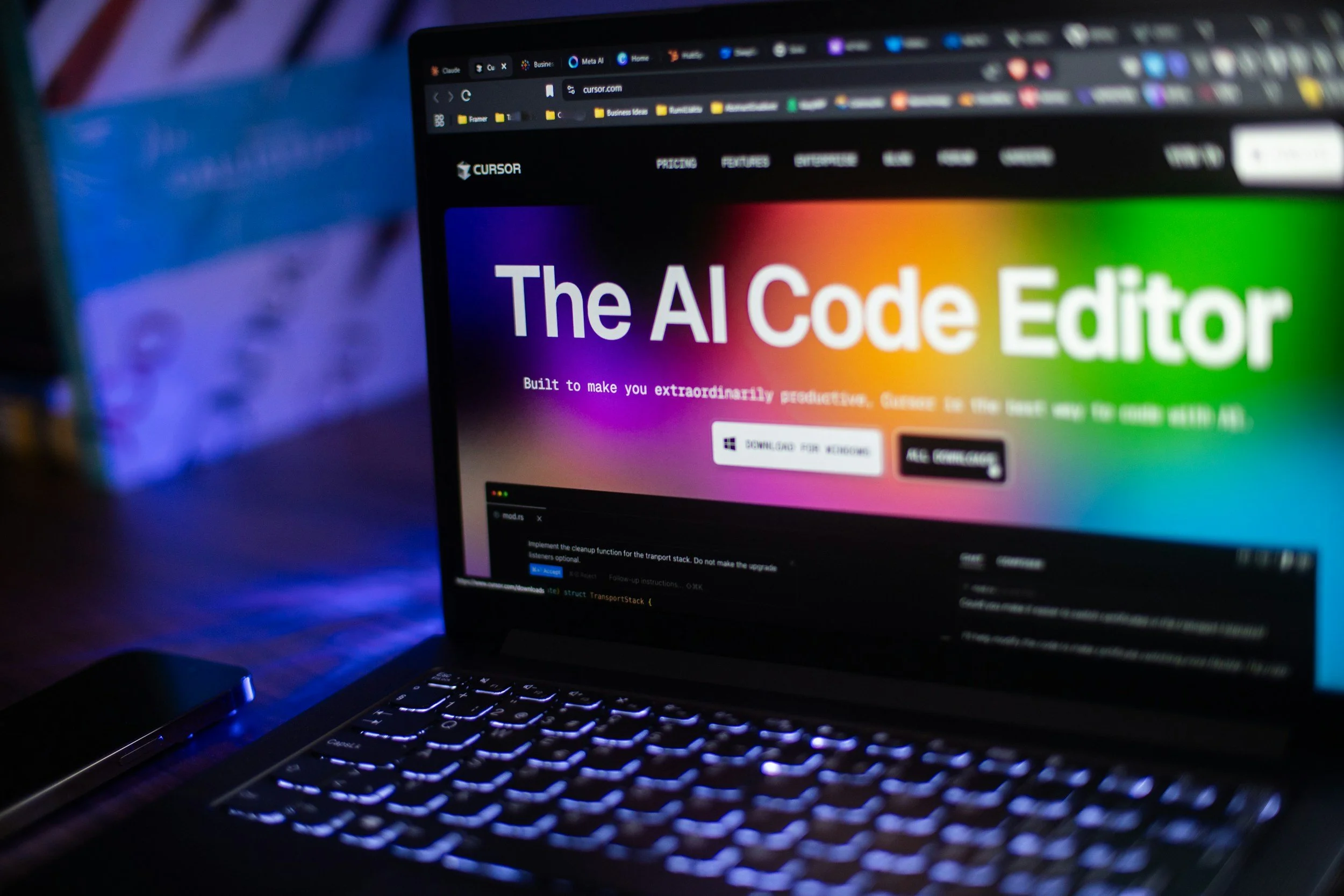
Artificial intelligence has changed the creative industry at an incredible pace. In what feels like the blink of an eye, businesses gained access to tools capable of writing website copy, designing logos, generating photography, creating videos, and building fully functional websites with little more than a few written prompts. The speed is impressive, the technology is evolving almost daily, and for many business owners, it feels like the beginning of a completely new era.
Along with those advances came a new phrase that has spread rapidly through the technology community: vibe coding.
For some, it's a badge of honor. For others, it's the future of software development. Across social media, entrepreneurs proudly share stories of launching websites, applications, and businesses without ever touching a line of code. AI does the heavy lifting while the business owner simply describes what they want.
It's an exciting idea.
It's also one that's easy to misunderstand.
Despite the name, vibe coding isn't really about coding. At its core, it's about replacing much of the thinking that traditionally happened before something was built. Instead of researching customers, developing positioning, refining messaging, planning user experiences, and making deliberate design decisions, those responsibilities are increasingly being handed to artificial intelligence. The result may be a finished website, but finishing something quickly and building something strategically are two very different achievements.
The danger isn't that AI can build a website.
The danger is believing that building a website is the same thing as building a business.
Vibe Coding Is Solving the Wrong Problem
Every business owner wants efficiency. Time is valuable, budgets are limited, and technology has always promised to simplify complicated work. AI absolutely delivers on many of those promises. It can accelerate research, organize information, summarize meetings, generate ideas, and automate repetitive tasks that once consumed valuable hours.
None of those capabilities are inherently bad. In fact, they're incredibly useful.
The problem begins when efficiency becomes the primary objective instead of effectiveness.
A website doesn't exist to give your business an online address. It exists to influence human behavior. Every page should help visitors understand who you are, what makes your business different, why they should trust you, and what action they should take next. Those decisions require far more than functional code or attractive layouts. They require understanding people.
That's the part vibe coding tends to overlook.
Artificial intelligence can generate thousands of words in seconds. It cannot interview your customers or uncover why one competitor consistently wins projects over another. It can’t identify the subtle emotional triggers that make someone feel comfortable hiring your business. Those insights come from conversation, research, experience, and strategic thinking.
Technology can build the house.
Strategy decides whether it's built in the right location.
A Finished Website Isn't Necessarily a Good Website
One of the reasons vibe coding has become so popular is because the results look convincing.
Modern AI website builders produce clean layouts, polished typography, responsive designs, and professional color palettes. To someone without experience in web design, it's easy to assume the difficult work has already been done.
In reality, aesthetics are only one small piece of what makes a website successful.
The strongest websites don't simply look good. They communicate clearly. They answer questions before customers ask them. They remove uncertainty, establish credibility, and guide visitors naturally toward making a decision.
Think about your own buying habits.
When you're researching a contractor, physician, attorney, accountant, or restaurant, you probably aren't evaluating the website's code. You're paying attention to something much more human. Does the business feel established? Does it seem trustworthy? Does it understand your problem? Can you picture yourself working with them?
Those impressions form surprisingly quickly, and they rarely happen by accident.
Great websites are built around psychology just as much as technology.
Why So Many AI Websites Feel the Same
Artificial intelligence doesn't create ideas the way people do. It predicts them.
Every AI model is trained by identifying patterns across enormous amounts of existing information. When it generates a homepage, writes a headline, or structures a service page, it's making statistical predictions about what similar websites typically look like.
That approach creates websites that generally function well.
It also creates websites that increasingly resemble one another.
The layouts become familiar. The messaging begins sounding interchangeable. Every business claims exceptional customer service, outstanding quality, and unmatched commitment. Every homepage follows a similar structure. Every call to action starts blending together.
Imagine walking through a neighborhood where every home has the same architecture, landscaping, paint color, and front door. None of the houses are unattractive, but very few leave a lasting impression because nothing distinguishes one from the next.
Businesses experience the same challenge online.
Differentiation has always been one of the most valuable assets a company can develop. If your website feels like a variation of every competitor's website, you've already made it more difficult for customers to remember why they should choose you.
Strategy Has Become More Valuable, Not Less
One of the biggest misconceptions surrounding AI is that it reduces the importance of strategy.
The opposite is happening.
As technology makes production easier, thoughtful decision-making becomes increasingly valuable. When anyone can generate a website in an afternoon, the businesses that stand apart will be the ones making better decisions before the first page is ever created.
Who are you trying to reach?
What concerns do your customers have before contacting you?
What makes your company different from every other business in your market?
Which services deserve the most attention?
How should your story be told?
Those questions influence every headline, every photograph, every navigation menu, and every call to action. They shape how customers perceive your business long before they decide whether to pick up the phone.
AI can help execute a strategy, but it can’t determine what that strategy should be.
The Future Belongs to Businesses That Combine AI With Human Expertise
The conversation around AI is often framed as a choice between people and technology. That isn't how successful businesses operate.
At Tampa Branding Studio, we use AI regularly because it's an outstanding tool. It helps us organize research, identify search opportunities, improve workflows, brainstorm ideas, analyze data, and eliminate repetitive tasks. Those efficiencies allow us to spend more time understanding our clients, refining messaging, developing stronger brand positioning, and creating better customer experiences.
AI doesn't replace our process.
It strengthens it.
The businesses seeing the greatest success today aren't avoiding artificial intelligence, nor are they handing it complete creative control. They're combining modern technology with experienced professionals who understand branding, marketing, user behavior, search visibility, and business growth.
Technology accelerates execution.
People create meaning.
Your Website Is One of Your Most Important Business Assets
Many business owners still think of their website as a project that eventually gets checked off a list.
In reality, it's one of the most important investments a company will ever make.
Your website influences search visibility, advertising performance, customer trust, hiring, sales conversations, referrals, and first impressions. It works around the clock, often becoming the first interaction someone has with your business.
When that experience feels generic, disconnected, or forgettable, every other marketing effort becomes more difficult.
A great website doesn't compensate for a weak business.
It reveals the strengths of a great one.
That's an important distinction because websites shouldn't simply describe your business. They should reinforce the reasons customers choose you in the first place.
Build Something Worth Remembering
Artificial intelligence will continue improving, and businesses that embrace new technology thoughtfully will almost certainly gain advantages in efficiency and productivity. Ignoring those tools isn't a practical strategy, but neither is assuming they can replace the experience, curiosity, and critical thinking that build meaningful brands.
The internet doesn't need another website that looks like every other website.
It needs businesses willing to communicate what genuinely makes them different.
At Tampa Branding Studio, we believe technology should support creativity, not replace it. We combine custom website design, branding, SEO, content strategy, and modern AI-powered workflows to build online experiences that reflect the businesses behind them instead of relying on recycled patterns and predictable templates. Every decision is grounded in strategy because strategy is what transforms a website from a digital brochure into a business asset.
If you're investing in your online presence, don't settle for something that simply gets published. Build something that reflects the quality of your business, earns your customers' trust, and continues working long after the latest technology trend has passed. That's the difference thoughtful strategy makes, and it's the foundation we bring to every project we create.
FAQs
-
Vibe coding is the practice of using artificial intelligence to generate websites, software, or other digital products primarily through prompts instead of traditional planning and development. While AI can quickly produce functional results, the process often minimizes the strategic thinking that helps businesses differentiate themselves, communicate their value, and create meaningful customer experiences. The technology itself isn't the problem. The risk comes from assuming a quickly generated solution automatically supports long-term business growth.
-
Not at all. Artificial intelligence can be an excellent tool for accelerating research, generating ideas, improving workflows, and assisting with content creation. The most successful websites today often incorporate AI during the development process. Problems arise when AI replaces strategy instead of supporting it. A website should be built around your customers, your goals, and your competitive advantages, not simply generated from a prompt.
-
Artificial intelligence learns by identifying patterns across millions of existing websites. Because of this, AI-generated designs often follow similar layouts, messaging structures, navigation, and calls to action. While these websites may look modern and professional, they can struggle to communicate what makes one business unique. Strong branding, thoughtful messaging, and strategic website planning help businesses stand apart instead of blending into the competition.
-
An AI-generated website can rank if it provides helpful, accurate, and original information that satisfies search intent. However, search visibility depends on much more than how content is created. Technical SEO, website performance, user experience, internal linking, topical authority, and demonstrating real expertise all influence rankings. Businesses that combine AI with experienced SEO strategy typically achieve stronger long-term results than those relying entirely on automation.
-
A custom website is built around the specific goals of your business rather than a generalized template or prediction. Every decision, from the messaging and page structure to the navigation and calls to action, is intentionally designed to connect with your target audience. Instead of looking like dozens of similar businesses, a custom website reflects your brand identity, communicates your expertise, and creates a customer experience that's difficult for competitors to replicate.
-
No. AI has become an incredibly valuable tool for businesses that understand how to use it strategically. It can improve productivity, streamline repetitive tasks, assist with research, and support creative workflows. The goal shouldn't be to avoid AI, but to use it where it creates value while keeping important business decisions rooted in human expertise, strategy, and an understanding of customer behavior. Businesses that combine artificial intelligence with thoughtful planning are often better positioned for long-term growth than those relying on either one alone.